
Bedrift
Ride
Prosjekt
Forbedre funksjoner og brukervennlighet i en sykkelapp for Oslo
Ansvar
- Prosjektleder
- UX Design
- Kodeimplementering
Sammendrag
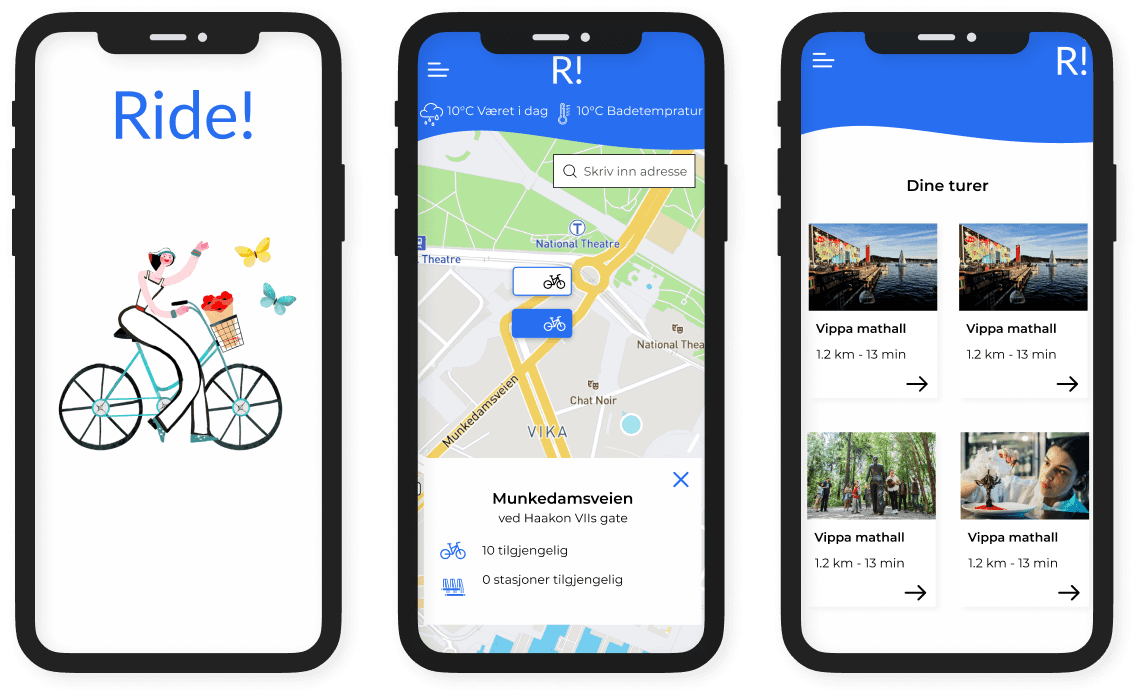
Ride er en sykkelapp for Oslo som vil gjøre mye mer enn det Oslo Bysykkel klarer i dag. Den samler sykkelleie, kulturelle severdigheter, sanntidsvær og badeplasser i én tilgjengelig opplevelse.
Introduksjon
Oslo fortjener en bedre sykkelapp
Oppdraget var klart: lag en sykkelapp for Oslo som gjør mer. Oslo Bysykkel fungerer greit — du kan finne stasjoner og sjekke tilgjengelighet — men det er omtrent der det stopper. Ingen kulturell kontekst, ingen værintegrering, ingen badeplasser langs ruten.
Visjonen for Ride var en app som gjør sykling i Oslo genuint hyggelig og informativt, ikke bare praktisk.
Problemet
For mange apper, for lite samhandling
Osloborgere som sykler jevnlig jonglerer med flere apper: én for sykkelleie, én for vær, én for severdigheter, en annen for badeplasser i fjorden. Yngre brukere spesielt er lei av denne fragmenteringen.
Kjerneproblemet: ingen enkelt app dekker hele sykkelopplevelsen. Ride ble designet for å samle alt på ett sted.
🚲
Sykkelleie
🏛️
Kulturelle steder
🌤️
Vær og temperatur
🏊
Badeplasser
Konkurranseanalyse
Hva konkurrentene gjør riktig — og galt
Oslo Bysykkel var det primære referansepunktet. De gjør én ting bra: vise stasjonstilgjengelighet. Men de tilbyr ingen anbefalinger, intet vær, ingen kulturell informasjon og ingen måte å planlegge en naturskjønn rute på.
Internasjonale sykkelapper som Strava og Komoot tilbyr planlegging og tracking, men de er sportsrettet. Ingen av de eksisterende alternativene betjener den avslappede byvandreren som vil ha en fin dag — ikke sette en personlig rekord.
Det viktigste funnet: det er et tydelig tomrom for en app som kombinerer nytte med oppdagelse.
Designprosess
Fra wireframes til tilgjengelig høyoppløselig design
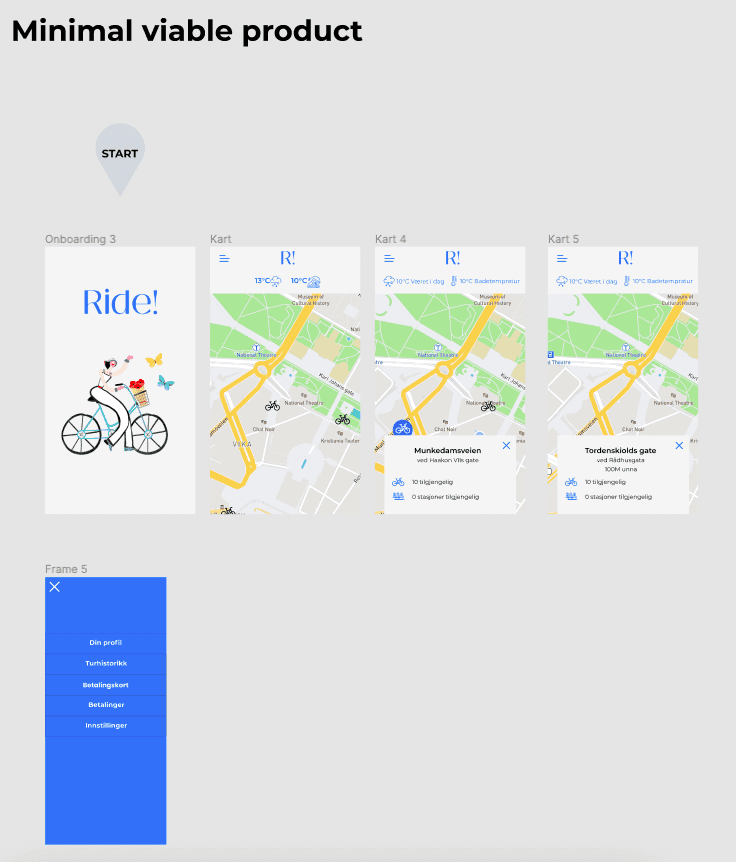
Wireframes ble skissert tidlig for å etablere kjernenavigasjonsstrukturen: et kartfokusert grensesnitt med et bunnark for detaljer. Wireframe-fasen var bevisst grov — målet var å validere informasjonsarkitekturen før man investerte i visuelt design.
Universell utforming var sentralt i designprosessen fra dag én. Fargekontrast ble sjekket i alle faser med Figma-plugin-en Contrast by Marrk og contrast-ratio.com for å sikre WCAG-samsvar. Alle interaktive elementer ble designet for å oppfylle WCAG AA som minimum.
Stilguide
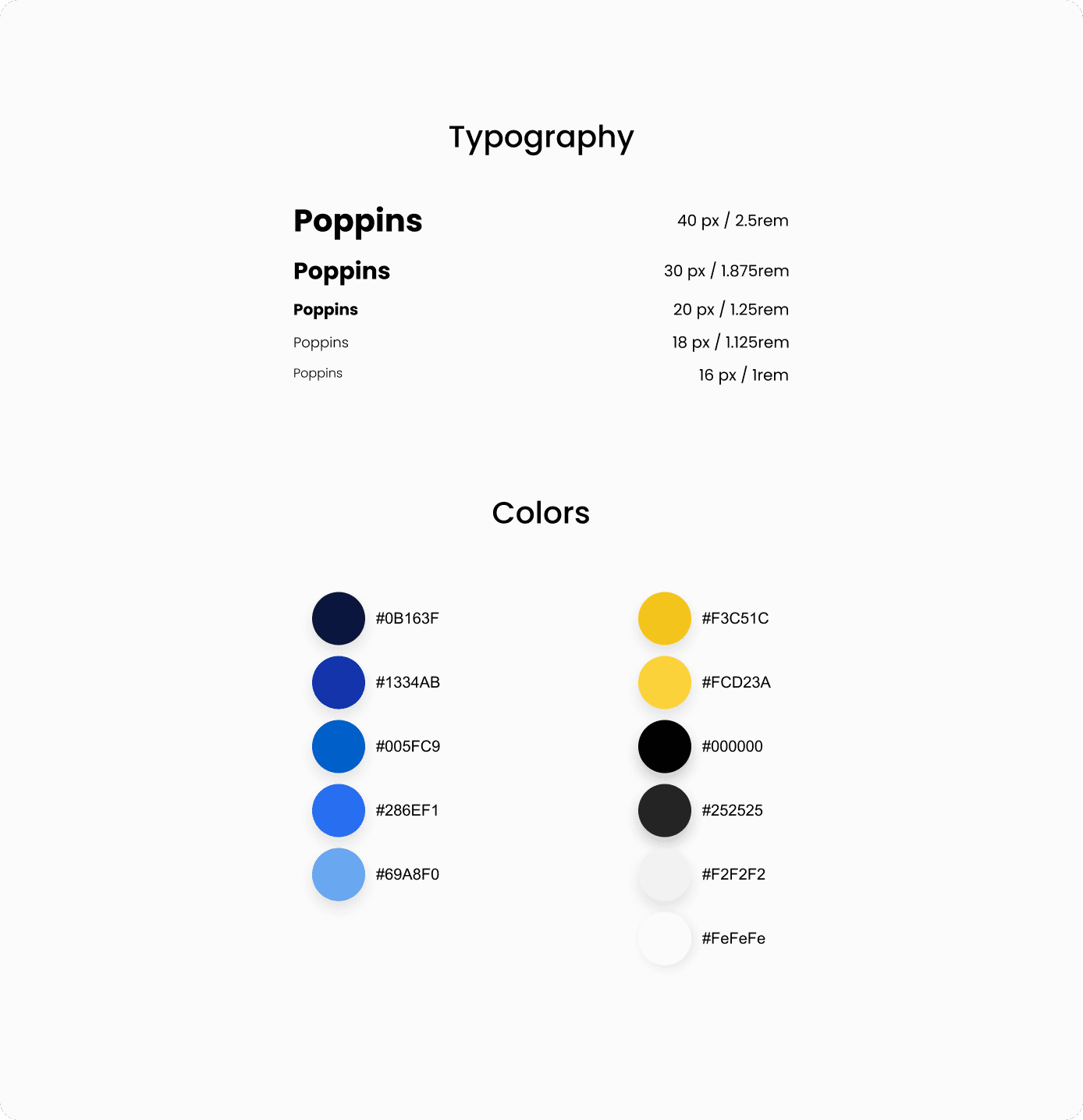
Blått for gjenkjennelse, luftig for tillit
Fargepaletten var bevisst forankret i Oslo Bysykkels etablerte blå. Tanken bak: oslosyklister forbinder allerede den fargen med byens sykkelinfrastruktur. Å bruke den i Ride skaper umiddelbar visuell gjenkjennelse som gjør appen kjent fra første gang man åpner den.
Derfra ble paletten utvidet med lysere, mer luftige toner for å gi appen en følelse av rom og ro — passende for en app som skal gjøre sykling hyggelig, ikke stressende.
Endelig design
En sykkelfølgesvenn for hele dagen
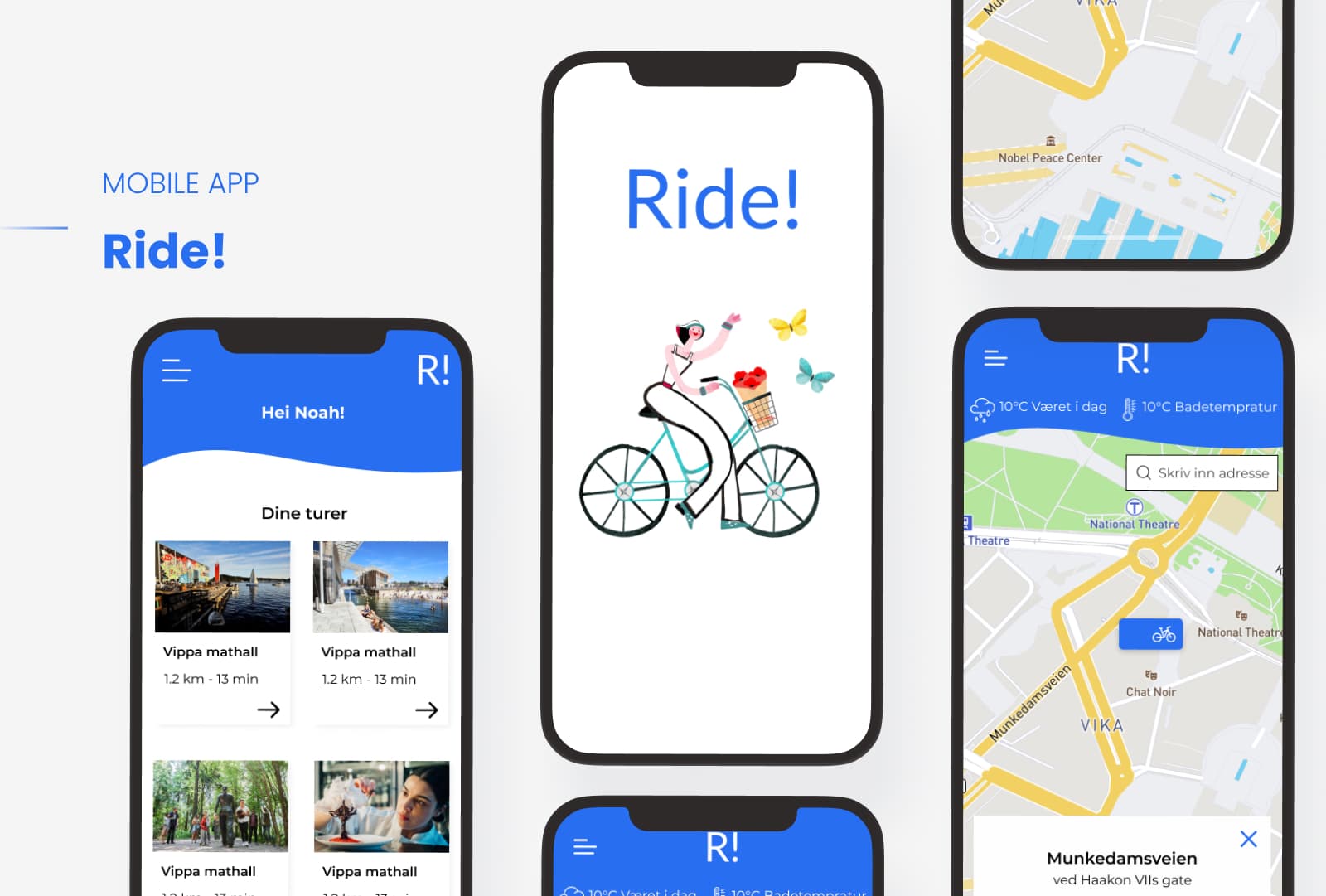
Den endelige prototypen lar brukerne:
- Finne nærmeste sykkelstasjoner og sjekke tilgjengelighet i sanntid
- Oppdage kulturelle steder og severdigheter langs ruten
- Sjekke lufttemperatur og badetemperatur ved nærmeste badeplasser
- Planlegge en rute som inkorporerer alt det ovennevnte
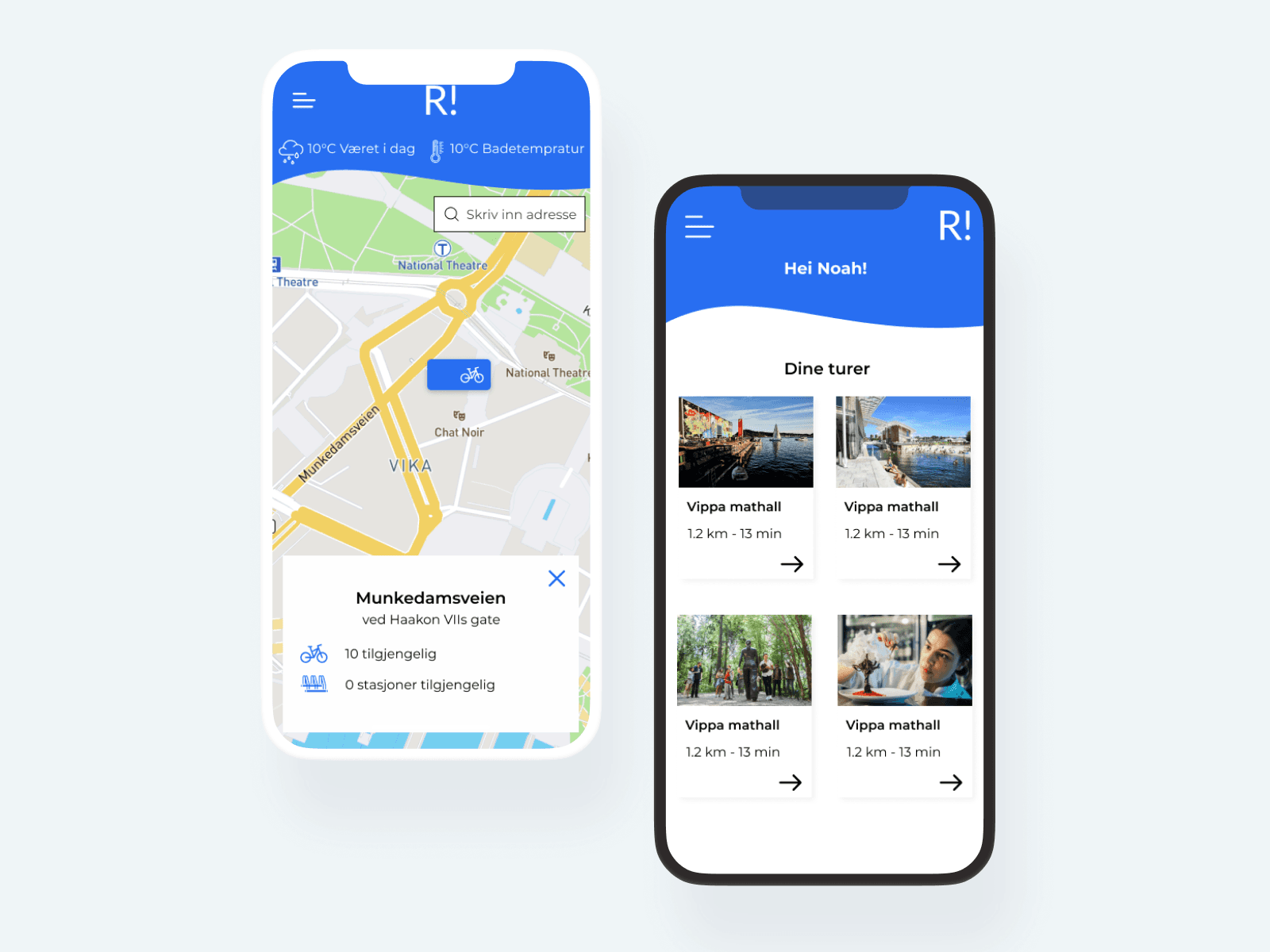
Resultatet er en sykkelapp som behandler sykling som en livsstil, ikke bare et transportmiddel — og som gjør Oslo til en by det er verdt å utforske på to hjul.