Bedrift
Nasjonalmuseet
Prosjekt
Gjøre det enklere å utforske Samlingen på nettsiden
Ansvar
- UX Design
- Informasjonsarkitektur
Sammendrag
Et skoleprosjekt fra Fagskolen Kristiania der målet var å forbedre brukervennligheten til Nasjonalmuseets digitale kunstsamling, Samlingen. Prosjektet har ingen offisiell tilknytning til Nasjonalmuseet.
Hva er problemet?
Brukerne sliter med å finne kunst i samlingen
Nasjonalmuseet er Norges største institusjon for kunst, arkitektur og design. Den digitale samlingen — Samlingen — inneholder tusenvis av kunstverk. Men å navigere i den er vanskeligere enn det burde være.
Etter å ha intervjuet brukere pekte ett funn seg tydelig ut: 64 % av de intervjuede hadde problemer med å navigere på nettsiden. De største frustrasjonspunktene var dårlig kategorisering av kunstverk, skjult filterfunksjonalitet og ingen tydelig forklaring på hvordan man kan avgrense søket.
Identifiserte problemer
Tre kjerneproblemer med brukervennligheten
Skjulte filtre
Filteralternativene dukket bare opp etter å ha klikket på et lite, lett-å-overse-ikon. De fleste brukerne fant dem aldri.
Ingen kategorisering
Kunstverkene var ikke organisert etter periode, type eller tema, noe som gjorde browsingen overveldende.
Ingen stedsinformasjon
Brukerne hadde ingen mulighet til å se hvor i museet et kunstverk faktisk var utstilt.
Hva er løsningen?
En tidslinje og alltid synlige filtre
Kortsorteringsøvelser viste at lange kategorilister var mer forvirrende enn hjelpsomme. Redesignet forenkler opplevelsen gjennom to hovedgrep:
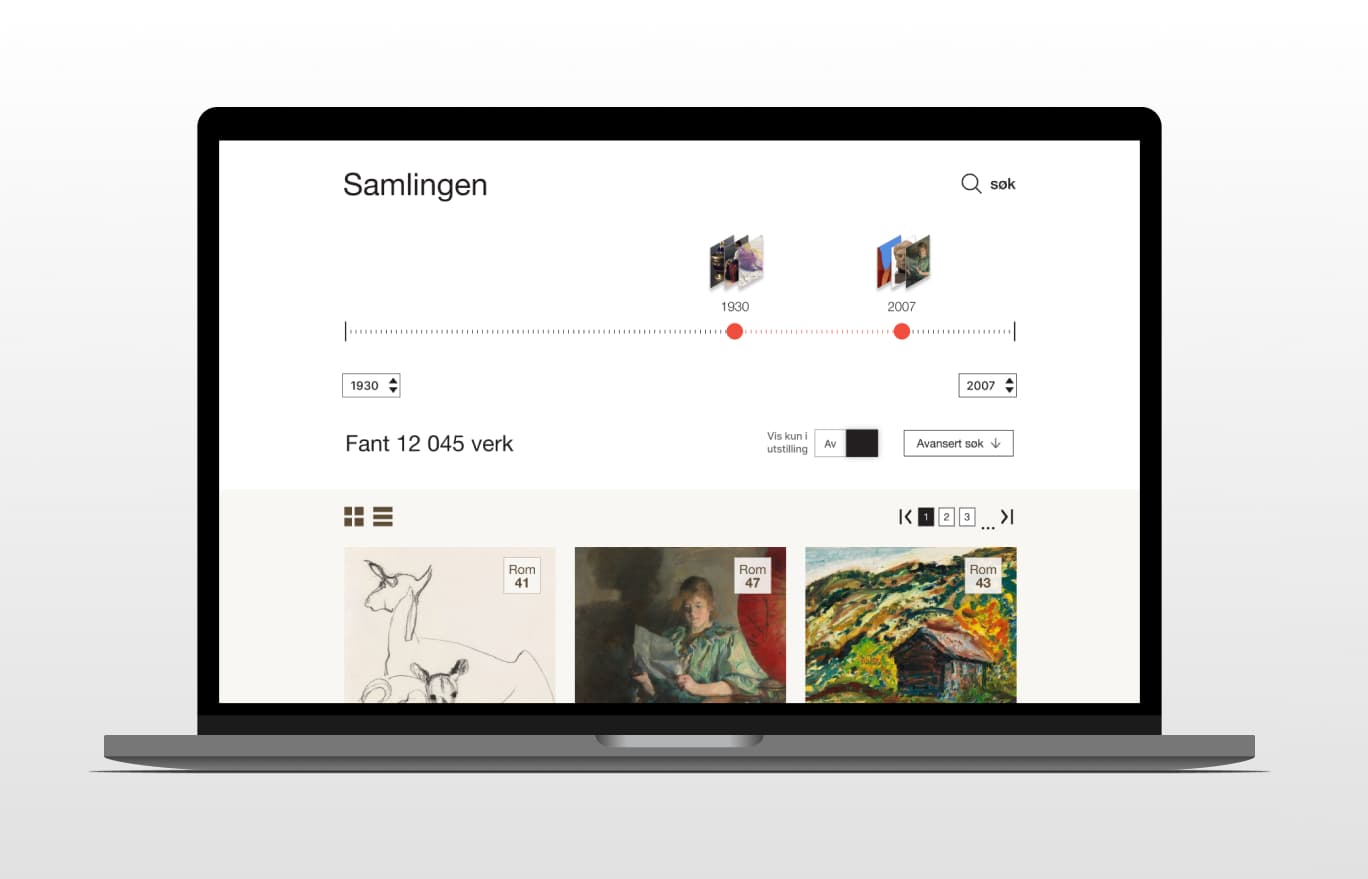
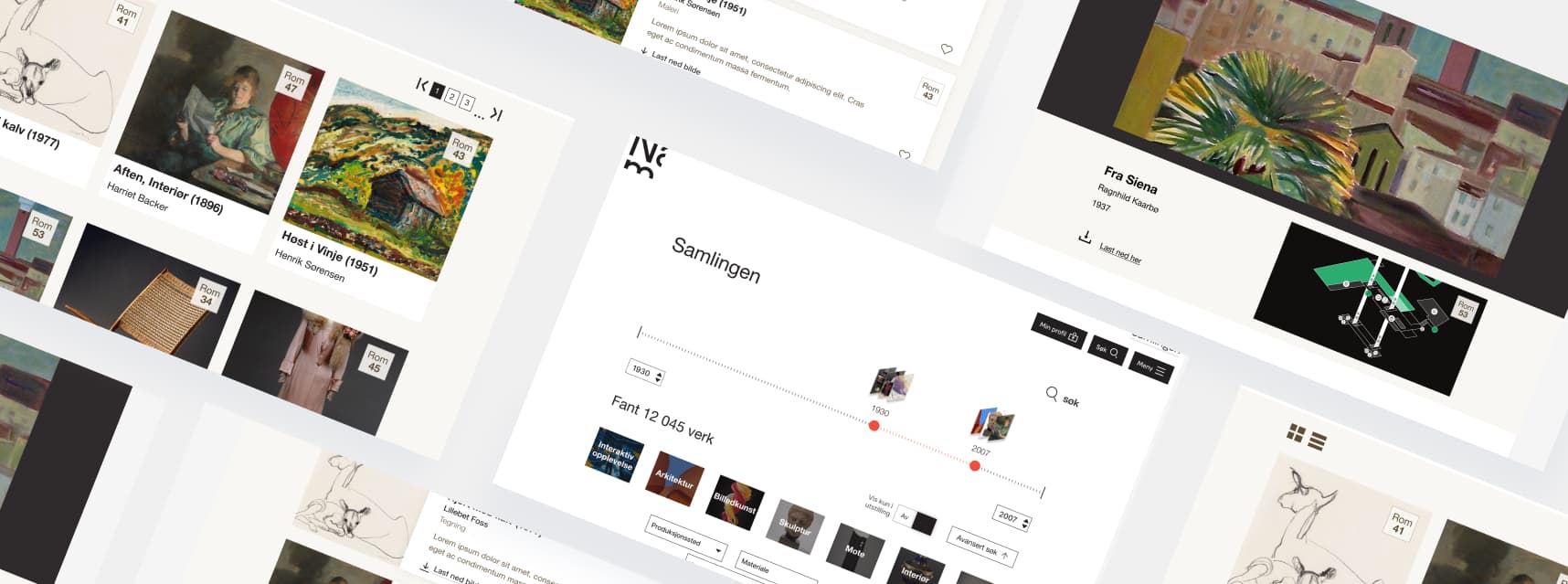
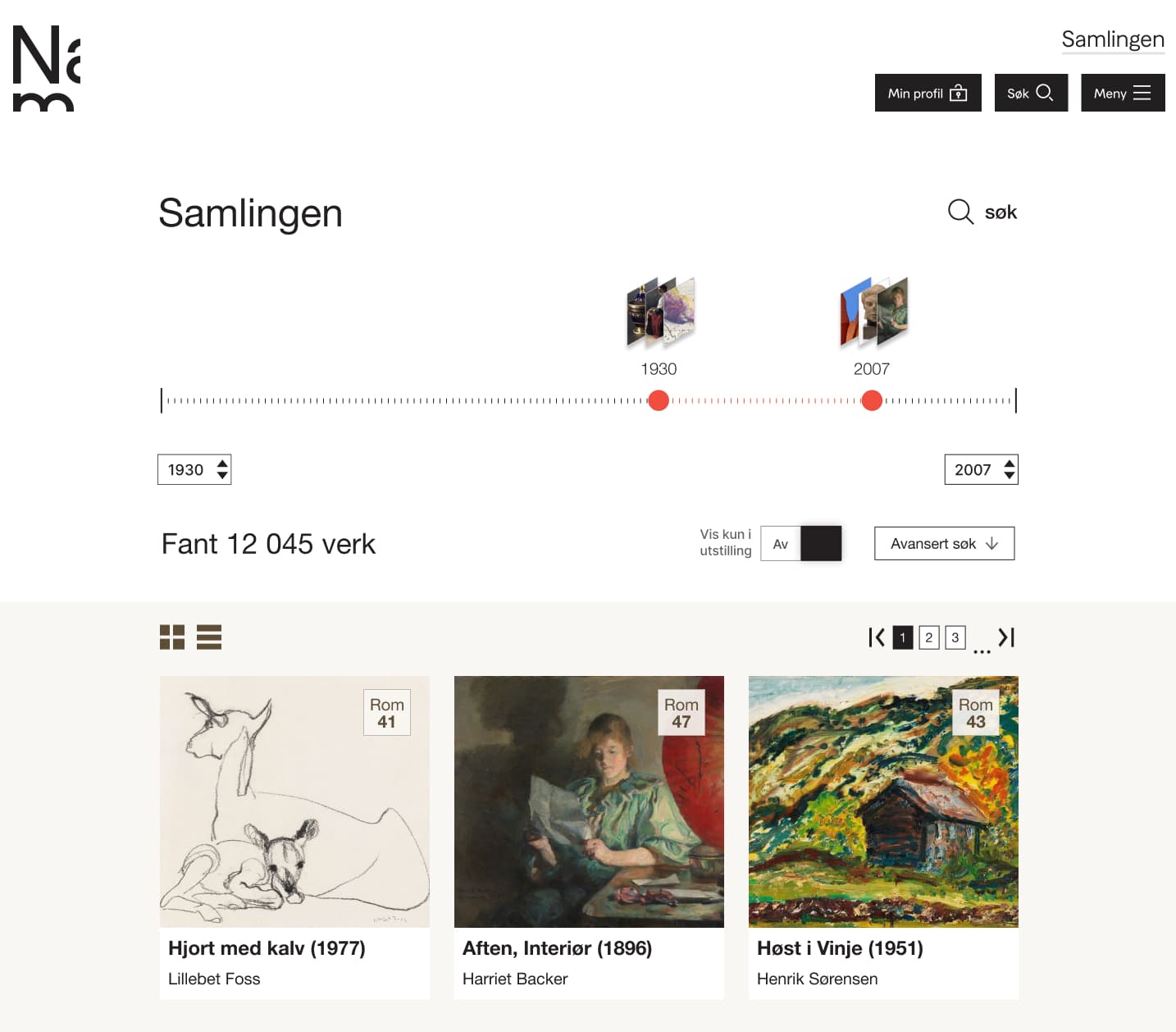
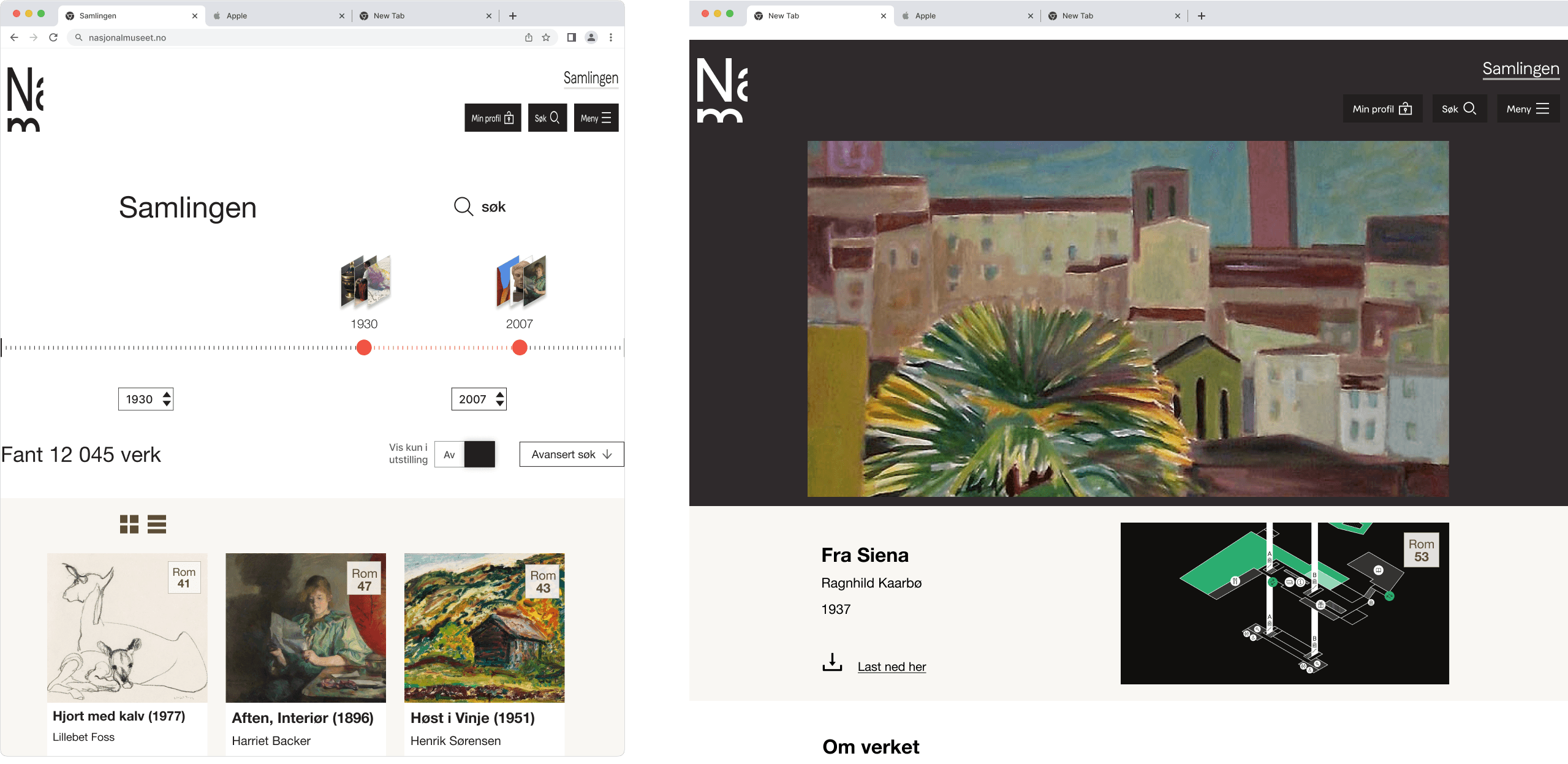
- Tidslinjevisning — en kronologisk måte å utforske kunstverk på som gir brukerne en intuitiv mental modell, særlig for de som allerede vet hvilken epoke de er interessert i.
- Alltid synlige filtre — filtrene vises nå direkte i søkefeltet i stedet for å ligge skjult bak et klikk, slik at brukerne umiddelbart forstår at de kan avgrense resultatene.
- Stedsinformasjon — hvert kunstverk viser nå hvor i museet det er utstilt, og kobler den digitale og fysiske opplevelsen sammen.

Hva lærte jeg?
Viktige lærdommer
Nasjonalmuseet har allerede en sterk visuell identitet utviklet av Metric Design. Redesignet tok bevisst vare på denne stilguiden — målet var å forbedre brukervennligheten, ikke å rebrande.
Kortsorteringsøvelsen var en nøkkelmetode i denne prosessen. Den viste tydelig at når brukerne får for mange kategorier på en gang, slutter de å kategorisere i det hele tatt. Å redusere kognitiv belastning ved å samle innholdet i en tidslinje var et direkte svar på denne innsikten.
Dette var et skoleprosjekt fra Fagskolen Kristiania og ble ikke bestilt av eller utført i samarbeid med Nasjonalmuseet.